
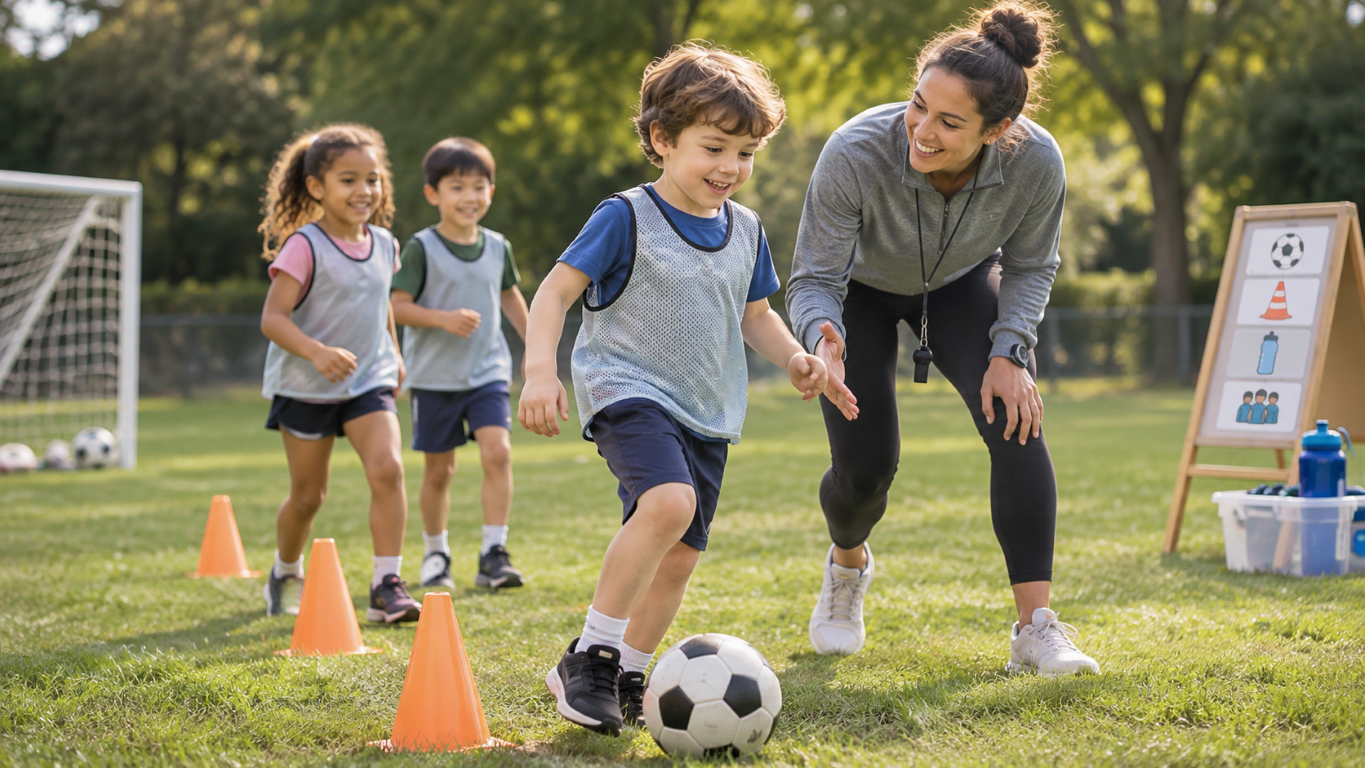
It’s a milestone many parents look forward to: their child’s first soccer game. Picture a crisp fall morning, jerseys so long they look like ball gowns, and a group of four-year-olds running in every direction at once like a flock of startled chickens. Nobody is keeping score.
While youth sports at such a young age don’t require much skill, the benefits of being part of a team can be significant. Youth sports can set the foundation for healthy routines and habits while improving physical and mental fitness.
Research has found that children who participate in youth sports often experience physical and psychological benefits. A 2025 review of youth sports research published in the International Journal of Behavioral Nutrition and Physical Activity highlights potential benefits related to cardiovascular health, reduced substance use, and protection against anxiety and depressive symptoms among adolescents.
However, for families of children on the autism spectrum, this experience and its benefits may not come so easily. The noise, the crowds, and the unwritten rules of a team can turn a childhood milestone into something stressful, or something families consider avoiding entirely.
Why Do Children on the Autism Spectrum Benefit From Youth Sports?
With so much stimulation and so many complicated rules, wouldn’t it be better to keep a child on the autism spectrum out of youth sports entirely?
Not necessarily.
Wherever a child falls on the autism spectrum, athletics can still offer a variety of physical, emotional, and social benefits.
For example, some children on the spectrum experience challenges with motor coordination, social interaction, or communication. Youth sports can provide opportunities to practice skills learned in therapy in real-life settings.
One set of skills in particular may benefit from what researchers call group-based organized physical activity: social and communication skills.
A 2025 review by researchers at Shanghai University of Sport, which pooled results from dozens of studies, found that these activities significantly improved social functioning in children on the autism spectrum and, to a lesser degree, communication.
A 2024 review by a researcher at Myongji University in Seoul, which combined results from 16 studies, reached a similar conclusion: physical exercise had a significant positive impact on social skills in children with autism spectrum disorder (ASD). The reported benefits were strongest for children under age 7, and the author recommended programs lasting more than 12 weeks.
These findings suggest that sports can offer more than physical activity. When activities are appropriately structured and supported, they can provide meaningful opportunities for children to practice teamwork, communication, cooperation, and confidence.
Valid Concerns: Why Traditional Sports Can Be Challenging
None of this means parents’ hesitation is misplaced.
For many children on the spectrum, a typical practice can be overwhelming: whistles blowing, coaches shouting across the field, bright lights in a gym, and a crowd of children moving in every direction at once.
Add fast-changing rules and the unwritten social expectations of a team, such as when to pass, how to celebrate, or what to say after a loss, and it’s easy to understand why some children may become overwhelmed, withdraw, or simply refuse to return.
Parents feel this, too.
In one study of families of autistic children, parents described feeling misunderstood and burned out, while also reporting a lack of autism-friendly sports facilities.
Even when children make it onto a team, being there isn’t necessarily the same as belonging.
When researchers interviewed autistic boys about their experiences in physical education classes, they found that although the boys participated in the same spaces as their classmates, achieving a genuine sense of belonging remained difficult.
These concerns are real, and they deserve to be taken seriously.
But the answer isn’t necessarily to keep children on the spectrum on the sidelines.
It’s to create sports environments where every child has a genuine opportunity to participate and belong.
Building Sports Environments Where Every Child Fits
Research suggests that well-structured group activities, with clear rules, predictable time frames, and support from adults, can provide valuable opportunities for children on the spectrum to participate and develop social skills.
In other words, many of the things that make sports overwhelming can be adjusted to make participation more comfortable and meaningful.
Here are five practical ways to create a more inclusive sports environment.
1. Make It Predictable
A consistent warm-up, the same activity sequence each week, and a visual schedule near the practice area can turn a chaotic session into a routine a child can count on.
Knowing what comes next helps children prepare for transitions and participate with greater confidence.
2. Reduce Sensory Overload
Hand signals instead of whistles, a quiet area where a child can take a break, and permission to wear noise-reducing headphones can make a meaningful difference.
Small environmental adjustments can help children stay comfortable and engaged without removing them from the activity.
3. Prepare and Support the Coaches
Coaches are often the bridge between a child and the team.
A coach who understands a child’s individual needs, communicates clearly, and earns the family’s trust can make a significant difference in the child’s experience.
Patience, flexibility, and an understanding of sensory and communication differences are particularly valuable.
4. Give the Child a Voice
Parents may hope for a team sport, but some children on the spectrum prefer individual activities such as swimming, martial arts, or horseback riding.
Those activities can also offer meaningful benefits, including opportunities to build confidence, coordination, and emotional well-being.
The most important goal is not participation in a particular sport. It is finding an activity the child enjoys and feels comfortable exploring.
5. Include Without Singling Out
The best accommodations don’t put a spotlight on a child.
A buddy system, smaller groups, or a meaningful role, such as helping set up the cones, can make participation easier without making the child feel different from everyone else.
Inclusion works best when support becomes a natural part of the activity rather than something that separates one child from the group.
Many of these changes benefit every child on the field, not just children on the autism spectrum.
How Little Tesla Supports Children Through Sports and Group Activities
At Little Tesla Pediatric Therapy, we believe that opportunities to build developmental skills should extend beyond traditional therapy sessions.
Our Little Tesla Soccer Club provides a structured, supportive environment where children can develop motor coordination, balance, teamwork, communication, and confidence through soccer-based activities.
Designed for children ages 5–11, the program uses small-group activities guided by trained pediatric therapy professionals. The focus is on participation, skill development, and positive experiences rather than competition or athletic performance.
Little Tesla also offers other specialized group programs that support social skills, executive functioning, sensory processing, and motor development.
These programs give children opportunities to practice important skills in engaging, real-world group settings while receiving individualized support.
Helping Every Child Find Their Place
Youth sports can offer children on the autism spectrum opportunities to develop physical skills, build friendships, practice communication, and experience the satisfaction of being part of a group.
But the environment matters.
Clear expectations, flexible coaching, sensory accommodations, and respect for individual differences can help make sports more accessible and enjoyable.
Every child deserves the opportunity to explore activities that match their interests, strengths, and needs.
If you’re wondering whether a structured sports or group activity could be a good fit for your child, the Little Tesla team can help you explore the available options.
Learn more about Little Tesla Clubs and how our small-group programs support children’s development through play, movement, and meaningful social interaction.